Does the Hayward Fault change my rebuild?
The fault runs about seventy-five kilometers under seven East Bay cities. It does not change how a wall dries. It changes what it takes to close one again. The retrofit rules sitting on top of it were written for the next one.
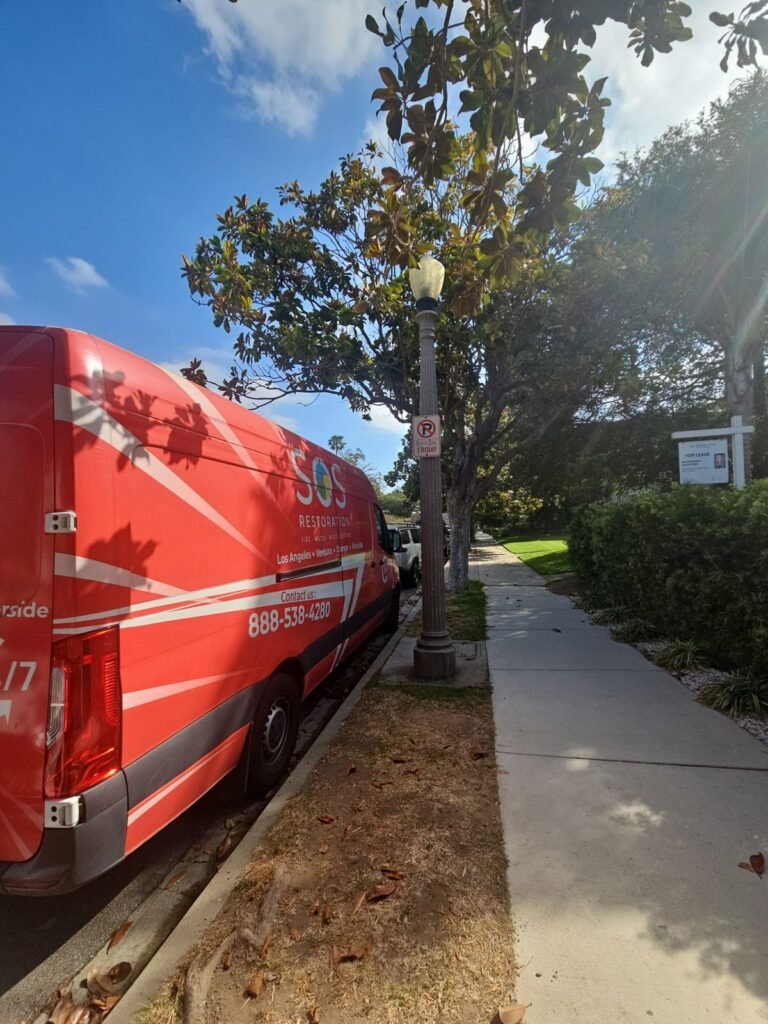
Somebody answers and a van leaves. Looking is on us. CSLB #1131134 · IICRC #70194273
Which cities does it run under?
Richmond, El Cerrito, Berkeley, Oakland, San Leandro, Hayward, Fremont.
Seven of the twenty-four, and the line is not a vague band. It passes under blocks people live on.
The last big one was in 1868, at magnitude 6.8.
Recurrence runs 140 to 170 years, which is why the retrofit deadlines exist at all.
Does that matter to a water loss?
Not to the drying. To the paperwork after it.
A meter reads the same on either side of a fault line. A hairline crack with dry framing behind it does not need us.
What changes is what a city asks for once a wall is open and a permit is in play.
That is where the soft-story rules land.
What is a soft story?
A ground floor with more opening than wall.
Tuck-under parking, a wide garage door, a storefront. The floors above lean on very little.
An ordinance covers it in seven Alameda County cities. Across the county line, none of the thirteen on the regional list carries one.
That split runs straight through this service area, and it changes the answer at the county line.
Has the deadline already passed?
In Oakland, for some tiers, yes.
Ordinance 13516 sets tiers, and several of those dates are behind us.
A building that never complied does not get a fresh start because a pipe burst.
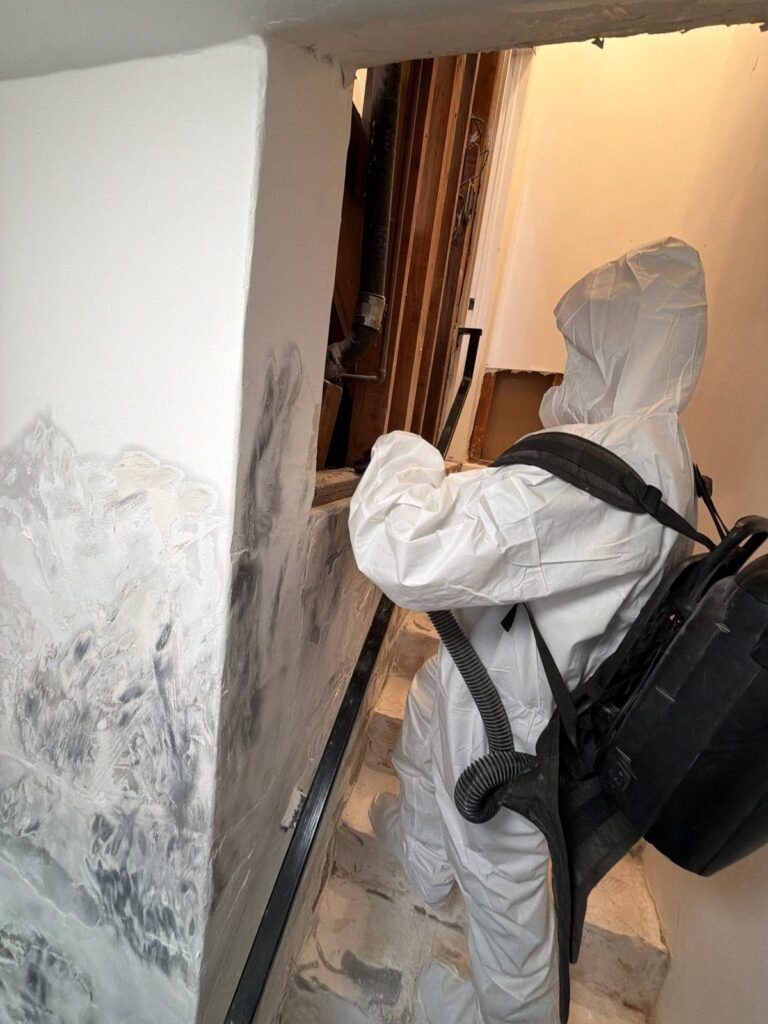
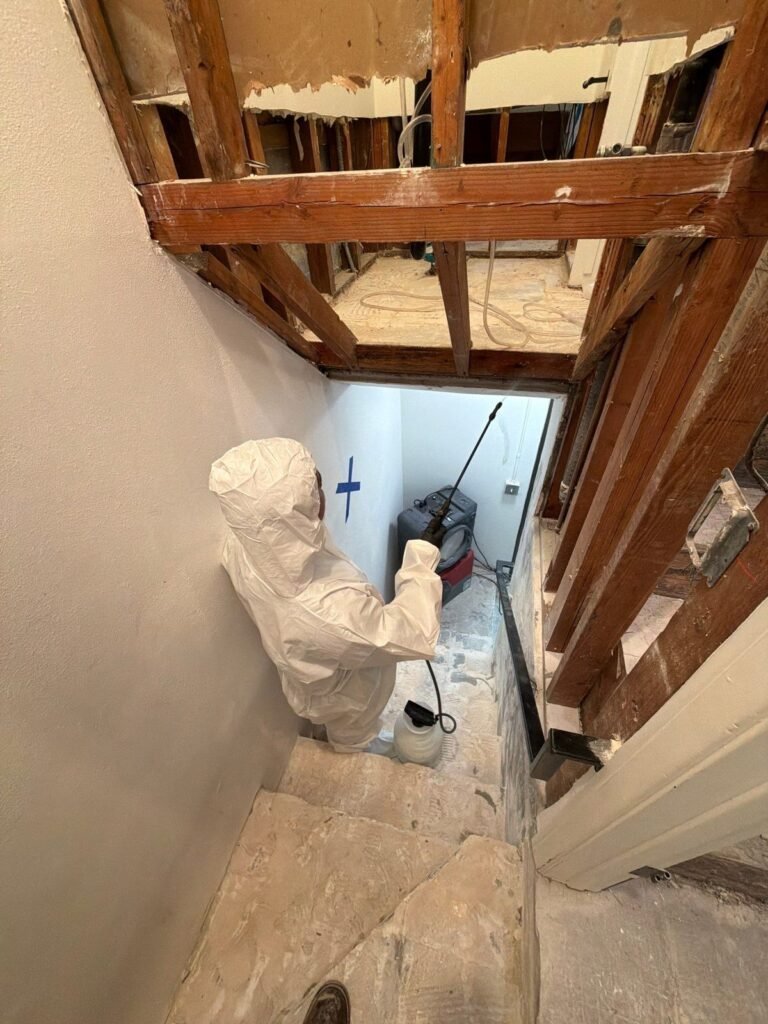
It gets a wall open and an inspector who can see the frame.
So what happens when it opens?
Framing that was hidden stops being hidden.
Most water repairs are repair in kind and nothing more. The wall goes back where it was.
But if the loss reached a post, a beam or a bearing wall, the drawing needs an engineer’s seal.
That is not the fault talking. That is any loss that touched something carrying weight.
Should I retrofit while it is open?
Sometimes, and it is a separate contract either way.
An open ground floor is the cheapest access you will ever have to that frame.
The repair puts back what the water took. Bolting a frame to a foundation is new work.
Two figures, two signatures, and the second one is yours to decide on.
Can I check my own block?
The state publishes the zone maps, city by city.
An address either sits inside an earthquake fault zone or it does not.
Being inside one does not condemn a house. It changes what a new structure has to prove.
For a repair after water, that mostly stays in the background until the frame shows.
Does this reach Contra Costa?
The fault does. The ordinances mostly do not.
Richmond and El Cerrito sit over it and carry no soft-story ordinance from the regional list.
Same ground, different rulebook, one county line apart.
Which counter your permit comes from is the first question on any rebuild here.
What does the drying cost?
What is not yours to decide?
The engineer’s numbers and the inspector’s signature.
We pull the permit, answer the corrections, and stand in the room on the day.
Beams, posts and hold-downs come off a sealed sheet we did not draw.
Our numbers are CSLB #1131134 and IICRC #70194273. Both are public.
Older walls raise more than this, and the guides take them one at a time.
What part is not a restoration job?
Retrofit engineering belongs to an engineer, not to a drying crew.
We open and dry. Where a wall goes back under a soft-story rule, the numbers come from an engineer who signs them.
The Soft-Story Ordinance, East Bay Ground Floor
Alameda Is an Island: the Water Rises Below
Which East Bay Cities Actually Flood, and Which Do Not
A wall that shuts on the first inspection instead of the second. (341) 220-0032, and somebody reads the frame with you.
Sewage, storm damage, mold, fire and smoke, water, and the reconstruction that follows them, for Oakland and the twenty-four East Bay cities around it. Any hour, any day. Se habla español.