Why did the job stop when the fans left?
One loss, two contracts, and nobody mentioned the second. The drying half is metered by the hour. The rebuild half carries a written total signed before anybody hangs board. Across the East Bay both halves are ours, on one file.
Somebody answers and a van leaves. Looking is on us. CSLB #1131134 · IICRC #70194273
Why can the rebuild not be hourly?
California wants a total in dollars, signed beforehand.
A home improvement contract carries that figure under its own heading.
So the law will not let a finished room be priced the way drying is.
The pause between halves is the law, not a delay somebody invented.
Then why does drying run on a clock?
Nobody can price hours nobody has counted yet.
How long a soaked subfloor takes is not knowable on the first morning.
So the hours get written down as they happen, against a published rate.
A fixed number quoted before any meter comes out is a guess wearing your name.
So what actually goes wrong?
Not the pause. The silence around it.
Somebody has to measure what left, decide what goes back, and write a number.
That is days, not weeks.
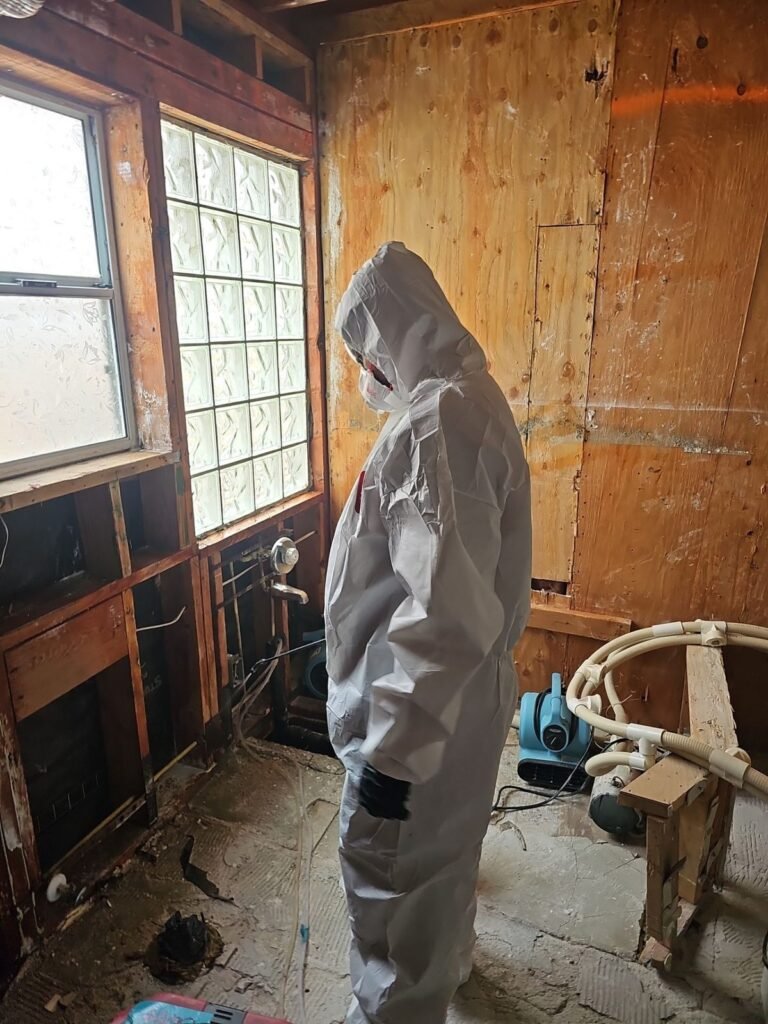
Three weeks of unanswered calls with the studs still showing is something else.
Do all companies do both?
Plenty handle drying alone, and handle it well.
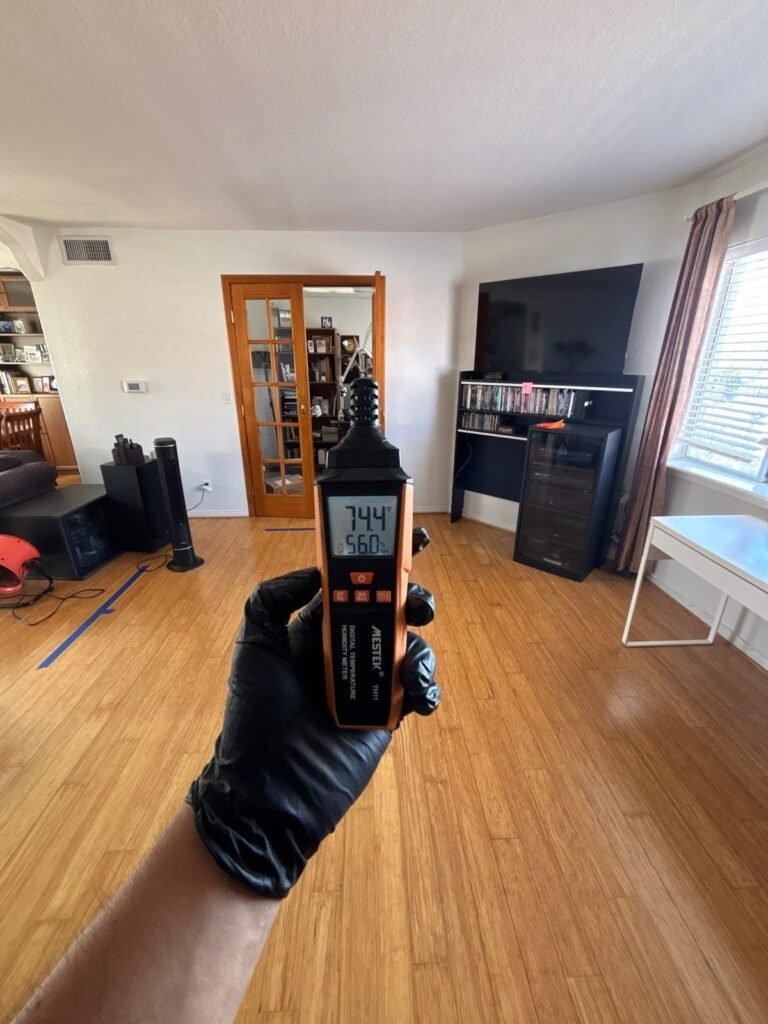
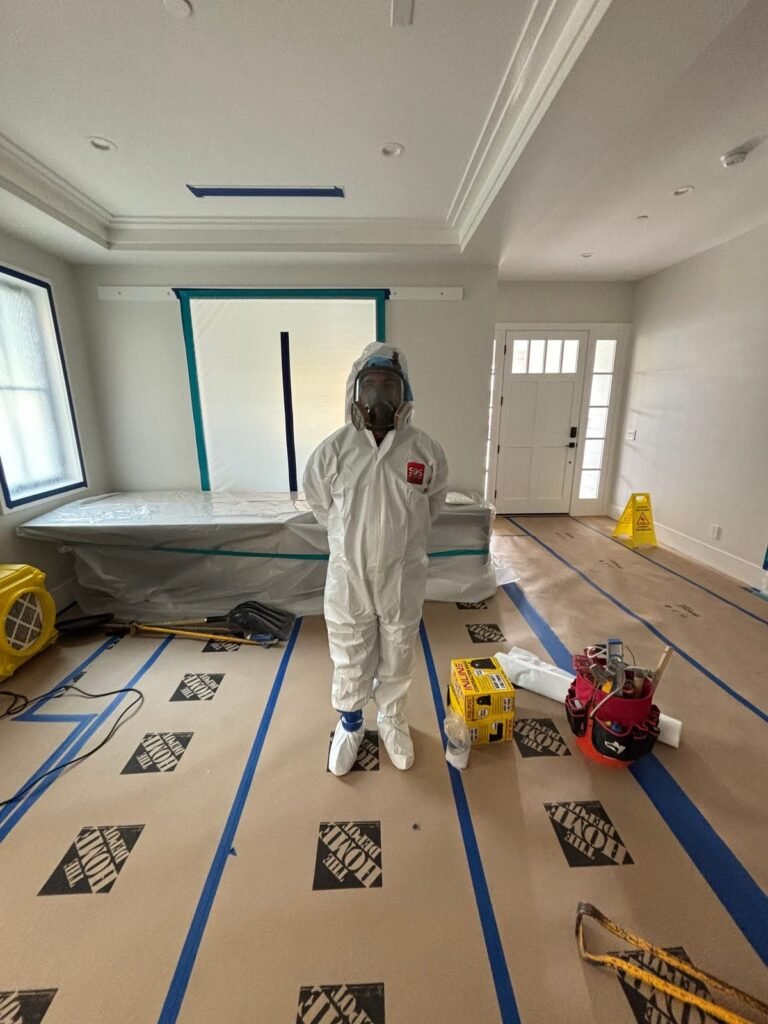
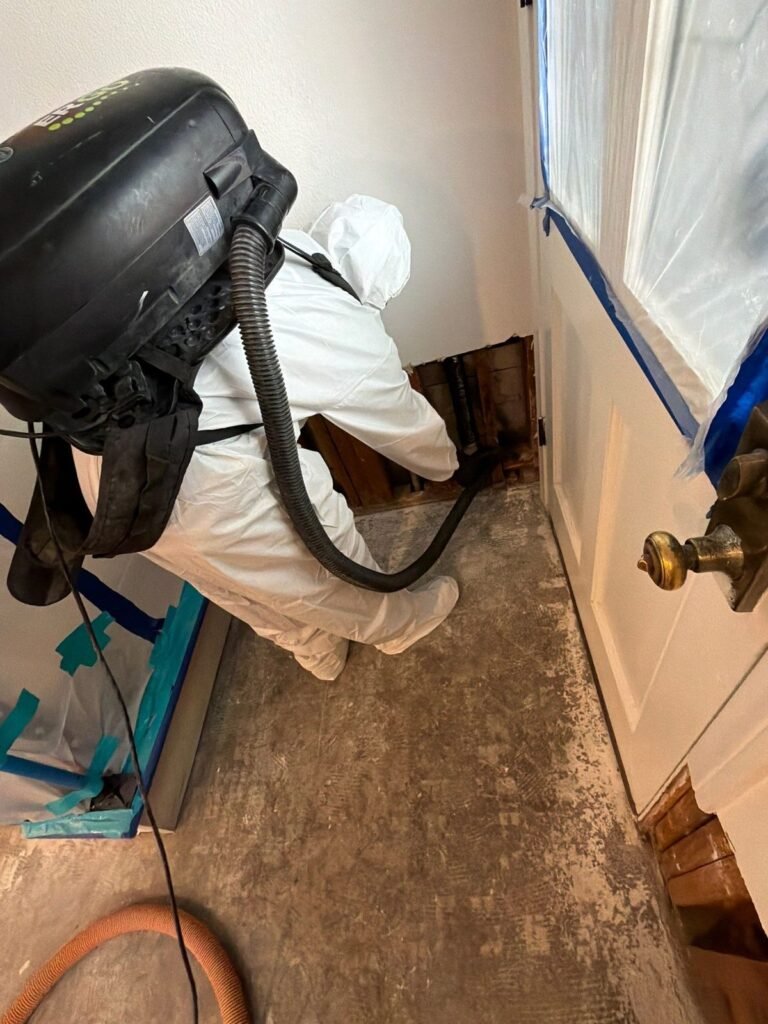
They turn up, pull the water, cut, set machines, chase the readings, and pack away.
You get a folder at the door and go looking for a builder.
Ask on the first morning which kind you called. Write the answer down.
What should be in that folder?
The record any honest rebuild estimate gets built on.
- The meter log, dated, split by room and by material
- The equipment sheet: how many machines, which rooms, hours run
- Photographs taken ahead of the saw, during the strip, and at the finish
- A drawing of how far the cut ran and what got hauled
- One dated sentence putting the structure at a dry standard
Lacking that last line, no one can name the date the rebuild became legal.
Without the folder, the next contractor prices an unknown, and unknowns get padded.
What gets asked before a signature?
Five questions, and irritation is its own answer.
- Which heading carries the total, written in dollars
- The deposit, and the line of the contract that caps it
- Whether the scope separates every room and every trade
- How a surprise behind the wall reaches you, before or after
- How far the matching runs on floor, texture and paint
Repair kitchen is a line item. Nine sheets hung, finished, textured to match and twice coated is a scope.
Put the same five to us. Where an answer arrives blurry, our paper deserves the same refusal.
How long can I back out?
Three business days, stretching to seven after a declared disaster.
A senior buyer gets five.
It belongs in its own notice beside your signature, with a form attached.
No form, and the paperwork is not finished.
Which numbers should I check?
Two numbers, both on registers anybody can open.
CSLB #1131134 covers the construction half. IICRC #70194273 covers drying and cleaning.
Take them from the contract itself, not from lettering on a van.
State law puts a number on every contract and on every advertisement.
What happens at the end?
Whoever cut the wall open is whoever shuts it.
Insulation, board, tape, texture, paint, base, doors and flooring.
Then a walk with you holding the list and pointing.
Reconstruction is the sixth service here, not a number handed over on the way out.
Where does it stop being ours?
At the inspector, the laboratory and the engineer.
The permit, the correction list and the inspection visit are on us.
A material nobody sampled has no result, and the folder says untested.
Beyond restoring what stood there, sizes arrive on a drawing somebody sealed.
The hourly half lives on the rate card. What the second contract still raises gets taken apart in the guides.
Must the same company close it?
No. Any builder you already trust can pick the file up from here.
We do not need the work to hand it over. One company has to own the close, and its board number has to hold up to a search.
The Hayward Fault and Closing a Wall, East Bay
Berkeley 1941, Dublin 2007: What Gets Sampled
Castro Valley Is Not a City: Permits Change
Studs showing and nobody calling back is a phone call, not homework. (341) 220-0032.
Sewage, storm damage, mold, fire and smoke, water, and the reconstruction that follows them, for Oakland and the twenty-four East Bay cities around it. Any hour, any day. Se habla español.